Seniority

All men, without exception, sit in the front row.
– Kodo Sawaki Roshi
This essay has been edited from its original form, published to the True Nature community on December 20, 2024.
I’ve recently returned from a 2 week training period at Daishu-in West, my teacher’s temple in Northern California, where I shared a room with 3 other women who are my senior. That is, all three of them have been participating in Rinzai training at the temple longer than I have been.
During the first week, I was doing yard work in the kitchen garden when the most senior student returned from a visit with the teacher and joined me to rake and bag up leaves. She offered up that our teacher had asked her how she thought I was doing, and I thought at first my fellow student was taking this opportunity simply to let me know that she spoke well of me to the teacher. That wasn’t quite it, though. She had something to share that seemed to make her a little uncomfortable.
“I told her that you seem to know how everything works around here,” my roommate told me tentatively. I eagerly hoped for more, but then the subject shifted: “She told me, don’t you ever forget your position, and she did like this with her hands.” The woman showed me my place in the line with one hand held low and her place with the other hand a couple of feet higher.
Lest this sound harsh or unkind in print, let me be clear that there was no trace of superiority in the woman’s voice or non-verbal expression. What I saw, rather, was insecurity, and the encouragement of the teacher that she could never lose her position to a new student.
“I don’t ever forget your position,” I assured her, and I could feel her shoulders drop with that assurance as though they were my own shoulders.
I admit, I was a little disappointed not to hear more about how I was assessed in the conversation with our teacher, and to have it emphasized instead that there is no path to be more senior than your seniors in this community of lay practitioners.
My dissatisfaction was fortunately mild and gave way to a renewed interest in the way seniority is recognized in some monastic and temple settings like it is at Daishu-in West.
Most organizations and businesses in which I’ve worked have struggled with and suffered from inequities like favoritism, bias, and yes - seniority that benefited systemic privilege at the expense of efficiency and healthy corporate or community culture.
I recognized intuitively that this was different: even though Rinzai Zen is a traditional lineage strongly influenced by patriarchal Japanese perspectives, I trusted that my teacher wouldn’t perpetuate a practice that had been handed down to her unless she could personally see the wisdom in it for her temple and her students.
Ursula Jarand isn’t merely confident. Her clarity transcends feminism, tradition, and even Zen. Because of my view of her, then, my interaction with the senior student offered me an opportunity to examine my assumption: is seniority really just about making things simple and orderly? It must not be so, or Ursula wouldn’t have so sternly reminded the senior student of her place in response to her acknowledging my own facility with temple structures and routines.
What I intuited was that the teacher’s upbraiding of the senior student about seniority was done out of deep compassion - not soft, gentle compassion, but the kind for which Zen masters are notorious: a metaphorical stick (historically, a literal stick) across the back to shock their students back into the present moment, unconfused and unafraid.
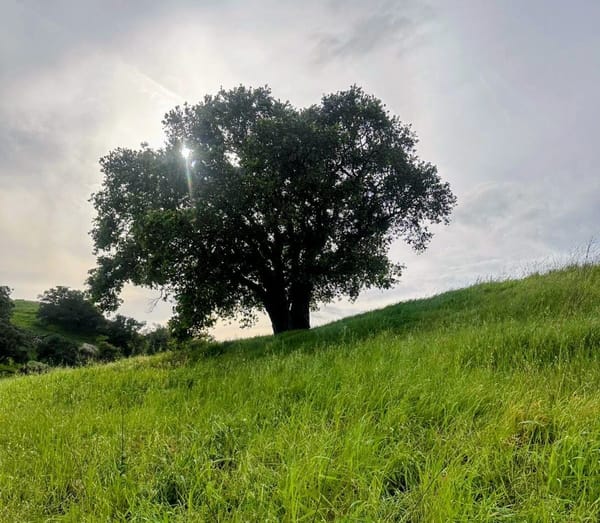
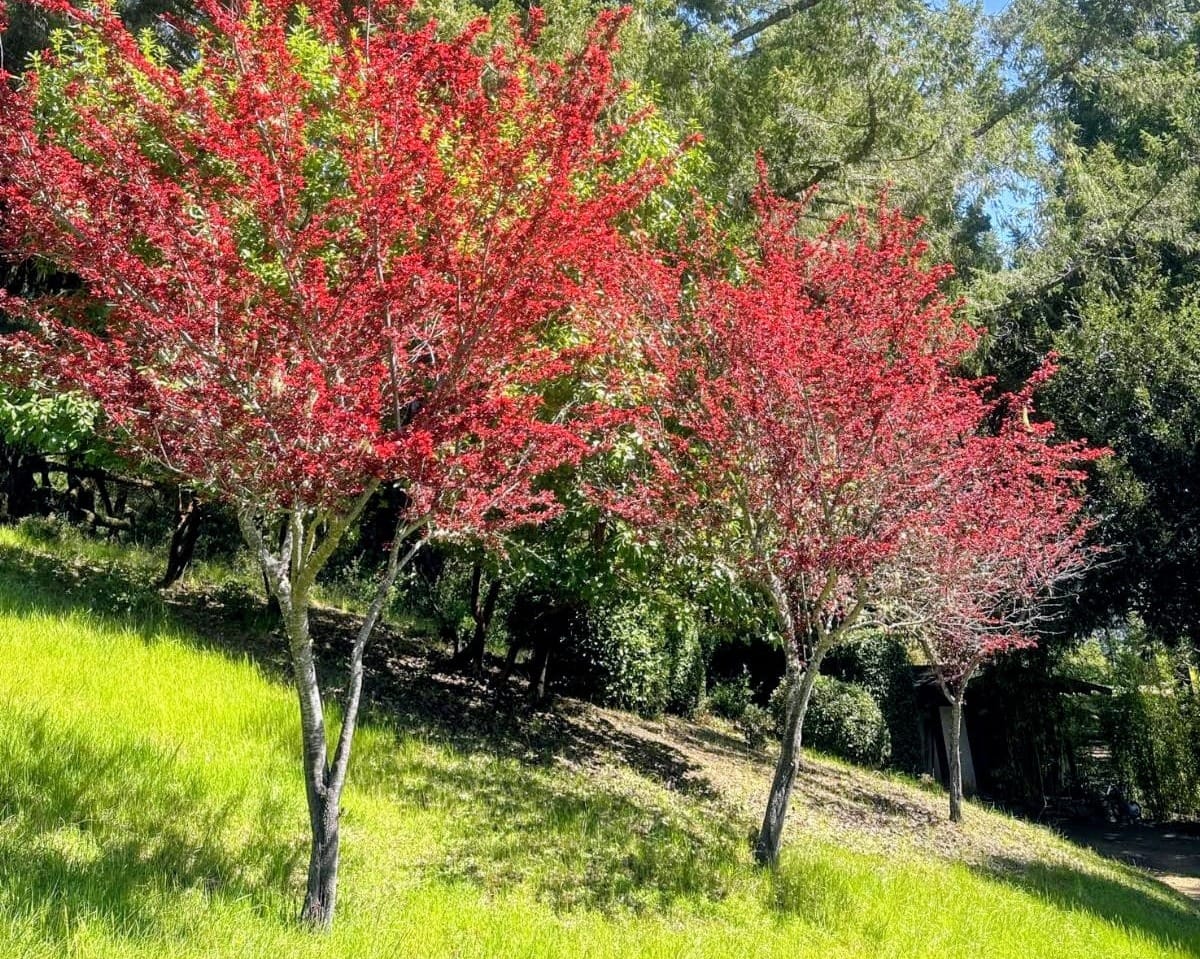
There is something profoundly impersonal about monastic seniority, after all. It’s not a meritocracy. One’s place is determined exclusively by when one arrived in time. Consider as an analogy that you have 3 different trees: an oak, an apple, and a peach. One offers tremendous shade, and the others bear fruit in different seasons. You may even prefer or need one or two of these trees more than the others, but none of those matters of preference change the fact of how old the trees are. They may be young or mature; they may be productive or diseased, but each one has a role to play in the local and greater ecosystem.
Each tree may be loved by many or few; each may be valued in general or not at all; each may live for hundreds of years, be cut down early, or burn in a wildfire. Each tree has a place, though, unlike any other, and so does each person.
—----------------------------------------------------
I can never be good enough to leapfrog anyone in the seniority line. This isn’t corporate America. It’s a reflection of nature itself - impersonal and radically fair, in that no one is given special consideration.
As with other humbling insights I’ve experienced, I appreciated the relief this one offered. I was reminded viscerally that I’m no greater and no less than any other of the several billion people on the planet. In a subtle yet fundamental sense, I don’t have to earn my position, I can’t lose it, and I can’t change it.
I’m thankful for one more egoic position being snuffed out: one more idea to which I was unwittingly clinging, one more foreign substance around which my system was regularly agitated and inflamed. I always felt that infection, even when it has been unnoticed by those closest to me.
Other impurities remain.
Some, I trust, will come out in time as I continue on a path of insight and integration. Others, perhaps, remain unseen or are too deeply lodged to be truly removed. My hope, in regard to those that remain a part of me, is to come to know them as the oyster knows its own.
--------------------------------------------------
“As you know, pearls develop out of impurity. There’s this tiny speck of impurity entering an oyster, and this impurity cannot be ejected and it cannot be ignored; the oyster can’t just say, “Well, I think I’ll go to a movie and have a drink, and forget about it.” There’s an extremely intimate, close, and uninterrupted relationship developing between the oyster and this impurity.
Out of that relationship something develops that is highly valued as a beautiful object. It’s fortunate we don’t have to be artificially implanted with an impurity like cultured pearls. The fact that we are born human already supplies us with that speck of apparent impurity - it’s right there.
That speck of impurity might express itself in many ways - as loneliness, as irritation, as frustration, as failure, the feeling of not being enough. Along with that speck comes the desire to get away from it, the desire to ignore it or to get rid of it. It’s a tiny movement of either rejecting it or, if we can’t reject it, ignoring it.
We have a choice, we can continue to give in to that impulse of wanting to get away, looking for comfort elsewhere, looking for solutions in other places, or we can follow the oyster’s example - we can develop a close, intimate relationship with that which is right here. That’s what practice is about.
In the relationship with that impurity, right there, nowhere else, the pearl is realized. And it is not even a relationship anymore, because in the intimacy of what is happening, the self drops away. It’s only if we realize that luminosity and that luster as ourselves, that we can recognize it in everything: in a pile of shit and in a rosebud, there’s no difference. . .
Don’t get misled by the beauty of the pearl, either. Don’t look for it in separate places, something to attain in the future.
It’s already happening.”
– Ursula Jarand