Good Enough, part II
“It is fine to investigate what others have said or written in books. But to say, “I’ve understood something that I didn’t understand before,” that is not Zen practice.” - Sekkei Harada Roshi
[all unattributed stanzas in this essay are from the poem Wild Geese, by Mary Oliver]
You do not have to be good.
You do not have to walk on your knees
for a hundred miles through the desert repenting.
I've misunderstood Good.
All this time I told myself I had been trying to be good.
It was the safe story.
Even when done poorly and having been a people-pleaser I could at least say I’d been confused, but trying to be both kind and honest. That story, which I believed for a long time, also allowed a more insidious, less easily justified form of being good to flower, camouflaged against the background of the good that is revered as unassailable when well-executed.
Even when I realized many years ago that I had to be willing to please others less in order to be honest, the big reveal of my ulterior motives wasn’t too painful. Shocking, but not shameful, I saw that I strove to be kind not primarily out of an altruistic orientation, but in order to be treated gently, in order to be liked, in order to stay safe.
I traded in some dishonesty for honesty, then, under the banner of a still deeper kindness - a radical, neutral kindness that demanded only avoiding sloppy harm. It was easy for me.
What felt like profound insight at the time now seems superficial. I could drop my old concept of good and its affiliated behaviors without dropping my identity. I remained largely safe and affixed extra self-applied stars to my ego for my newly-found courage.
The hypervigilance of my youth served me well as I cut the glaring co-dependent edges like I might the extra dough from a pie pan ready to bake, and kept the part I liked and that continued to be rewarded: attentiveness.
—--------------------------------------------------------
Before the training period started, a few of us worked together at the border of a pea-gravel path edged by bamboo, picking the gravel out of the planting bed and moving it back to the gravel path. We talked as we worked, passing the time pleasantly in connection and distracting us from our aching backs and legs.
One practitioner relayed a story of having her habit patterns pointed out by the Roshi. I looked in my own experience and didn’t have one I could remember that was as clear as hers, but I knew full well that there is plenty I still misunderstand and can’t see.
“If only we could see our own blind spots,” I said, with only a little unease, because I had no idea how soon and painfully one of my own would be revealed to me.
Against my conscious will, I saw into a blind spot last week that will be a surprise to no one who knows me. I don’t want to be good. I want to be good at.
I tend to be competent. I tend to be able to learn whatever I put my mind to. I take for granted that I can accurately assess a room and behave appropriately and comfortably. Like most people, I probably also avoid or don’t have an interest in things for which I don’t have an aptitude. I haven’t learned to surf or speak multiple languages or play the cello or write good screenplays - all things that have captured my interest and longing at times - but I also never fell into despair about not acquiring those skills. There is only so much time, after all, and many things I would like to do.
There is one thing though, that I’ve long-held as the most important to me. When I go to train at Daishu-in West, I pray for the willingness to put my life on the line. I have had a self-concept that I would do anything for the practice, that I trust it completely.
Either that is not true, or I have discovered that I’m not good at it, or perhaps both, because there is something harder for me to give up than my own life, and I don’t know how to do it.
You only have to let the soft animal of your body
love what it loves.
Can I love what I love without trying to do it well or right?
My longing is for the one thing I can never have. It requires that I am not there to have it, and I have long understood that intellectually.
The horror is in realizing that who I am now is comprised of multiple traits that are in direct conflict with what I intend.
I can’t be good at this. That isn’t how it works.
I have to actually risk more than my life, not just stay in love with the idea and pray to have the courage when the moment comes.
The moment comes and goes constantly while I continue to wait for one that looks a little different, one in which I can risk everything while staying safe. One in which I can do it right, and not be seen awkwardly struggling.
Tell me about despair, yours, and I will tell you mine.
Meanwhile the world goes on.
Meanwhile the sun and the clear pebbles of the rain
are moving across the landscapes,
over the prairies and the deep trees,
the mountains and the rivers.
Meanwhile the wild geese, high in the clean blue air,
are heading home again.
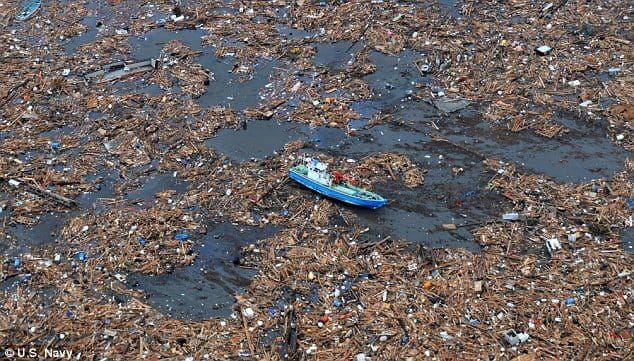
Meanwhile, I am scraped out like a pumpkin again. I am standing in the field of debris again after the latest tsunami of self. Helpless to outrun it, surprised at having survived it again, not yet sure where to begin picking up the trash, or whether I can just walk away.
Whoever you are, no matter how lonely,
the world offers itself to your imagination,
calls to you like the wild geese, harsh and exciting
over and over announcing your place
in the family of things.
I hear the geese, but what are they saying? I never did learn that language.
How do I let go of wanting to understand?
How do I stop asking how to let go?
—------------------------------------------------
“Better than something good is nothing.” - Chinese proverb
—------------------------------------------------------------
If you enjoy these contemplations, please consider a donation to the Center for Contemplative Enrichment to support our non-profit work. All donors who make a recurring contribution of any amount are considered members of our True Nature community, and will receive email invitations to our online sitting groups and more.