Friendship

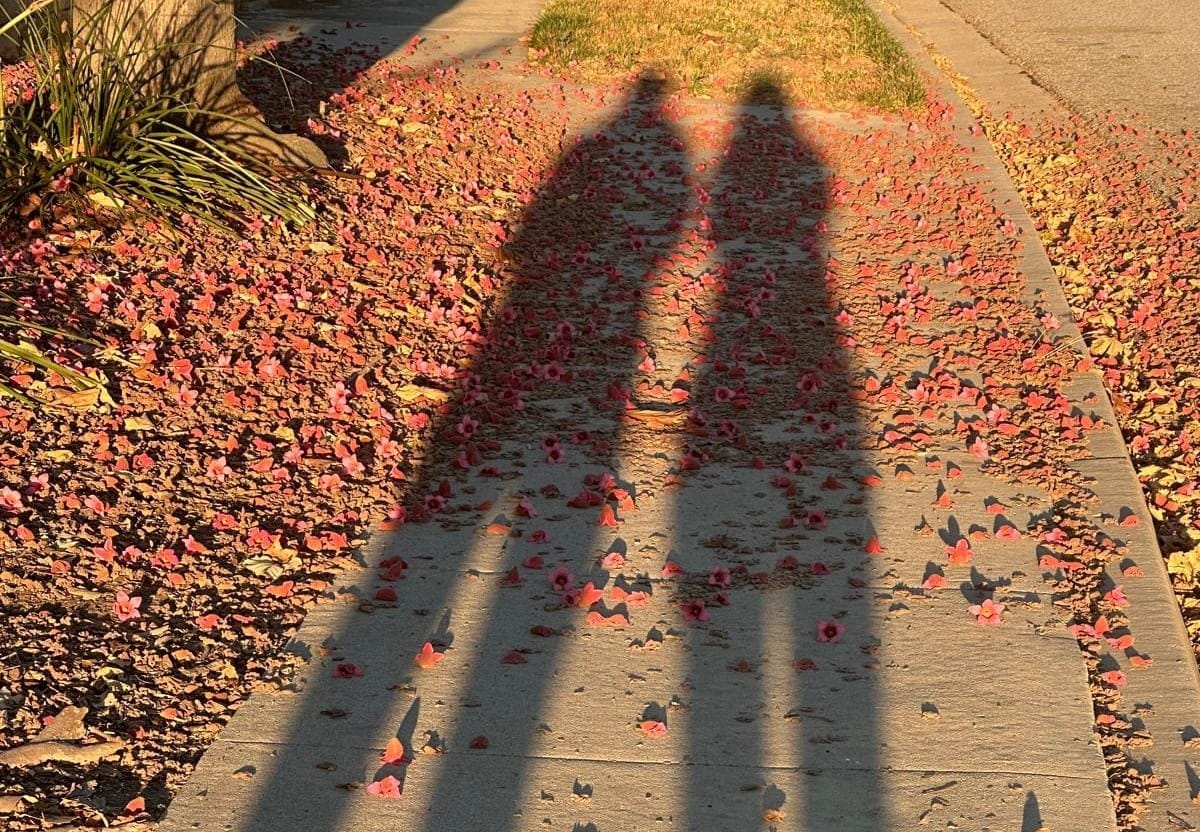
Friendship means little when it’s convenient.
– “Shimazu Koji,” John Wick 4
On a long flight last fall, I watched John Wick 4 after recently discovering for myself that the John Wick universe is more like Harry Potter than it is about serious assassins and revenge. Everyone in a John Wick movie is either an assassin or assassin-adjacent, just as in the Harry Potter universe the muggle world is inhabited by a shadow population of witches and wizards. A revealing of what hides in plain sight occurs in both movie series each time a main character is in trouble, when everyone in the scene suddenly pulls out a wand, a gun, or a sword.
Once I watched the first John Wick & found out I related to the movies as pure fantasy rather than vengeance action flicks, it was easy to see the appeal. The plot, setting, and characters are relatable only at the polar extremes of mundane details and fundamental ideals of true love, trust, heroism, and the inviolability of puppies.
Movies like these can offer a reprieve to people living in a world in which there seems at times to be no justice, inadequate courage, and few repercussions for those who openly and intentionally harm others. Fantasy can reduce harm and retribution to something simple, straightforward, and satisfying: if it’s not clearly anyone’s fault, we may be able to get a dog and move on; if someone violates our trust or breaks a taboo, however, vengeance will be eventually and completely . . . executed.
The movie is cathartic precisely because the hero spectacularly breaks taboos including vigilanteism, violence, and homicide. As best I can tell, however, few of us really want to live in a world where these taboos do not exist. Most people agree that rules and laws are necessary to civil society, and that healthy communities share ethical norms and values. In this fractured era, though, our assumptions are challenged: what happens when laws are ignored, decency is mocked, and norms are tossed aside like archaic notions of an unenlightened era?
In this context, then, enters an early scene in John Wick 4: Wick unwittingly leads seemingly every assassin on a particular continent to the doorstep of his last remaining loyal friend. By loyal, I simply mean not transactional. Plenty of people would help the main character when it was in their own superficial best interest to do so. One remained whose integrity outweighed his survival instinct. So when Wick apologized to his friend Shimazu Koji for bringing certain violence and catastrophe to his home, Shimazu replied, “friendship means little when it’s convenient.”
A few minutes later, that character was dead.
It’s the fantasy of a rescuer in the form of a best friend who is a master swordsman and loyal to the death - an adult version in a hostile world of having a white knight and princess fantasy: who will stand by you, stand up for you . . . die for you?
Honestly, probably no one. Fortunately, none of us are likely to find ourselves in a position that calls for such a friend to draw a literal sword. Some of us may have, though, the experience of friends who have stayed by our sides through long ordeals and at some cost to themselves. Many of us may also feel we are such a friend to others. None of this interests me so much as what that longing for an unconditional friend ultimately represents.
Friendships are often superficial and loyalty is frequently demanded rather than earned or freely given, yet there is a spark of beauty and truth in all such concepts. There is always a pearl within that which has been distorted and defiled by misunderstanding and sometimes by intentional manipulation.
Friendship means little when it’s convenient.
There are plenty of expressions that glorify loyalty in ways that can be at once pacifying and disquieting. Whether you’re disposed to consider these expressions affirmations of something deep and beautiful or tools to oppress and coerce adherence to questionable societal norms - or somewhere in between - the draw of cinematic positions is undeniable. Like all pulls that seem at first glance to be obvious or have polarizing stances, I see in them nuance and threads to the absolute.
In this case, for example, the heart of the concept of deep and loyal friendship could be said to be a beautiful clarity and devotion - stunning in its simplicity and integrity to the extent that it is uncomplicated and unconditional. When one’s loyalty is thus open-hearted, the twist is that death will surely follow in one form or another. As practitioners, this is good news, because to “die before you die” is precisely what we are after: death of delusion, confusion, and craving.
Instead of becoming calloused where we’ve been hurt by those who undervalue our trust and kind regard, may we recognize that we’ve simply misunderstood where our loyalties would be best placed: outside of what is unsatisfactory, coreless, and impermanent.
Good friends, and especially spiritual friends, are invaluable to well-being, encouragement, and growth through insight and accountability, but these too are threads to the absolute - representations, echoes, and messages from our deeper friend - our own True Nature.
A beautiful friendship starts at home, like metta practice: can you be a friend to yourself when it’s inconvenient?
Personally, my resolve wavers under ordinary conditions, then seems to strengthen again when the chips are down. Maybe the automatic tapping into that unwavering support should tip me off that it’s not so much my superficial personality that is reliable under all conditions, but True Nature itself.
I doubt any of us will take a literal sword to the heart in this lifetime, but many of us already have metaphorically, and many of us will take that wound more than once. Fortunately, True Nature cannot be killed, cowed, or even harmed.
I pray today to keep my heart open and accepting of whatever comes. I pray that my spiritual friendship with myself will not be conditional, that I may continue to deepen in humility when it feels inconvenient.
Kind people tend to think of friendship as involving other people - how good a friend you are to them or they are to you. I suggest now that you yourself are all parts of the friendship. Are you a good friend to yourself, or only when it’s convenient?