Forgiveness

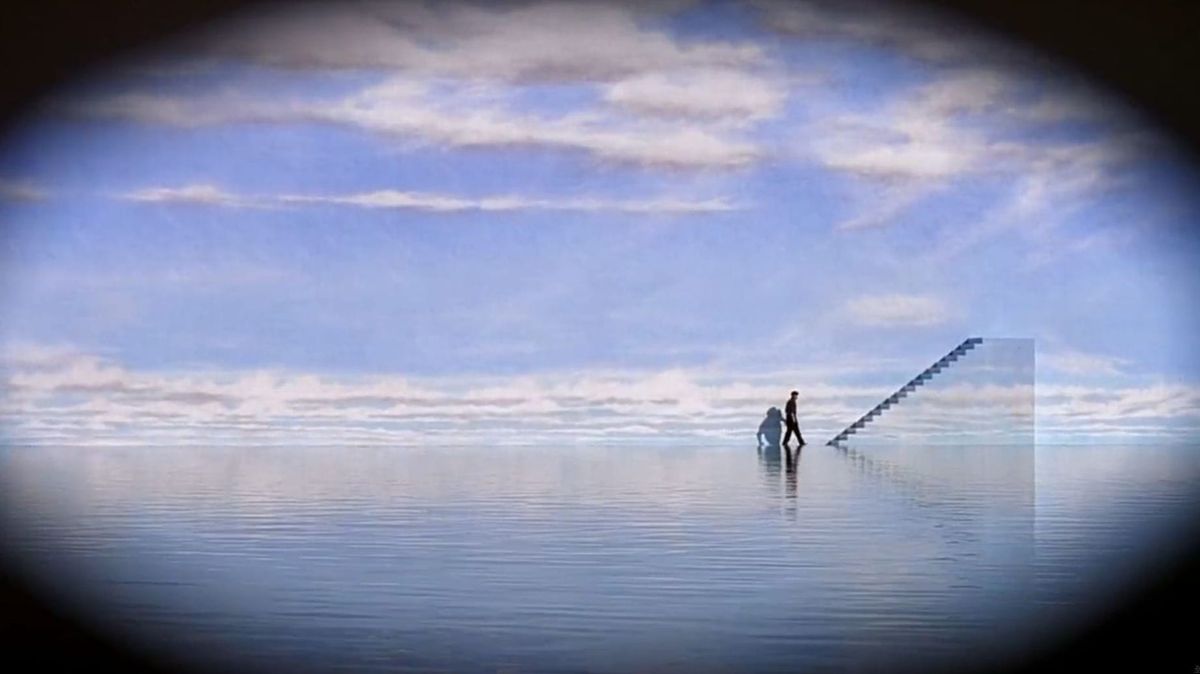
“If it isn't good, let it die. If it doesn't die, make it good.” - Ajahn Chah
This story may sound like it’s about forgiveness, but it’s really about grace.
When I began to see through some of the foundational stories in my family of origin, it didn’t immediately feel like grace. The paradigm shift was disorienting and distressing at first, but also seemed to unlock a shed full of tools I had always needed and hadn’t known where to find or how to use. Frankly, I had never even heard of some of them. Trying them out, though, I quickly gained mental and emotional stability, motivation, and just straight up getting together of my shit. That first big tear in the green screen of what I thought was permanent, real, and true in my early 30s made it easier to see patterns, to spot a “tell” of my history or imagination muddying my perception, to notice when I had blind spots, and to ask for help looking into them.
I knew a speaker who used to say, “problems are like ice cream,” she so relished the opportunity to dig in to the next puzzle and become more free.
While I never have gotten to where I look forward to or savor a problem as much as I might a cone of Chocolate Malted Krunch, at least I no longer cringe and despair that I “should be better than this by now.” I’ve heard so many other people express that same self-critique of their rate of “progress” that I’m willing to bet some of you relate. As it turns out, of course, that is just one more green screen that will eventually be torn too: the idea that growth can be weighed and measured like dry goods from the bulk bins, or completed at a certain pace and level of proficiency, like academic coursework.
Once each green screen is torn, one can never again believe the version of reality it has been providing as a backdrop.
I can’t say I look forward to the next tear or the next shattering of illusion. Each one comes with a price, whether it’s the suffering that leads to the tear or the initial bite of humility at realizing how wrong I was - again. With each tear, I become more responsible for my own state of mind and well-being, as it becomes somehow ever more clear that it can’t be anyone else but me holding the keys to my own freedom. For me then, it’s less like ice cream and more like realizing over and over that most of my struggles are due to self-imposed limitations - as though I can’t tell I’m (again) trying to manage life with one hand tied behind my back until someone points it out.
After a few years of experience working through various grudges and fantasies, I felt a little ridiculous about how easy it was to free my tied-up arm, so to speak.
Sometimes I found it funny, always a relief, and always humbling: one more time, a blind spot; one more time, hurting myself and blaming it on someone else.
Last November, I drove up to the temple alone for my fall training session. I had about 10 hours in the car each way, so I queued up the Tibetan Book of Living and Dying on audiobook (as one does), hoping to get shored-up for the intensive week of practice ahead of me.
Sure enough, there was a point at which the book prescribed gratitude for those whom we resent or who have harmed us, since they are the catalyst for change and perhaps the only vehicle through which we can find and break through certain delusions.
Three candidates from my own life came to mind immediately - people with whom I had ongoing ties and not a little discomfort. Feeling humbled that I so easily came up with not one name, but three (!), I resolved to turn toward these people in my upcoming training period with some gratitude and all the unconditional love I could muster.
I addressed two out of three, and felt rewarded for my efforts. I noticed more ease around one person I continued to see, and more clarity around the other when I was reminded of them through their online presence or by mutual acquaintances.
When I facilitated a retreat months later this past February, I offered a guided forgiveness practice one day. As I guided the group, I worked through forgiveness on the same two people I had in mind during my November training period.
Again, I again noticed more clarity and more openness, but I still didn’t realize I had a blind spot: the fact that the third person kept not quite making it into my practice.
My relationship with my mom has never been comfortable or easy. I have two memories of her extending kindness to me, and countless other moments I experienced as cruelty. I was so inured to this way of relating with her that the associated discomfort I continued to carry never seemed optional. I would just as soon ask the sun to tone it down a little as I would have thought it possible to be liberated within this relationship as long as one of us was living. I conflated the fact of our being in relation to each other with how painful that needed to be.
Sometimes life is painful, after all. I know this as well as anyone. There is no escaping pain altogether, but I have found other unpleasant states to be less compulsory aspects of being human. Confusion, for example, has dramatically decreased for me across the board. I no longer believe that it needs to be a constant or even frequent companion to anyone willing and able to adopt a sincere spiritual practice.
So when confusion came knocking again this year, at first I thought I could turn it away at the door. I couldn’t this time. It slipped in when I wasn’t looking, and next thing I knew it was sleeping in my bed, preparing my meals, and looking in my mirror.
The past six months have been some of the hardest of my life in terms of my relationship with my mom. Confusion flowed more than it ebbed with every interaction. I invited her to stay with me to celebrate my son’s high school graduation, but my only goal was to get through it. I would have settled for so little. After one more painful conversation, though, something in my system finally slipped and tore a hole in the green screen that depicted these conditions as necessary.
I suddenly knew it was time to turn toward this third person with all of my attention. I called a mentor to bookmark my intention while it was fresh and to hold myself accountable. I opened up the toolshed and picked up all the relevant hardware.
Fears and false beliefs easily surfaced that have probably been in my subconscious for decades. One belief was that I had limitations and scars due to my upbringing that were slowly healing the best they could. I had a fear that there was damage I couldn’t see and would never be mended. I feared that this damage was exactly that which would prevent certain unknown birthrights of mine from ever being released from escrow.
Going into the forgiveness work with help, I expected to address misunderstandings and get some relief. I did not expect to see that my limitations and scars were illusions. The next screen was torn. I see now that I was never scarred at all.
As soon as you see a mirage, you can’t convince yourself to drink from it anymore.
What is there to forgive?
If you enjoy these contemplations, please consider a donation to the Center for Contemplative Enrichment to support our non-profit work. All donors who make a recurring contribution of any amount are considered members of our True Nature community, and will receive email invitations to our online sitting groups and more.