Breakfast

“Fearlessness is trust.”
– Ursula Jarand
This essay was originally published to the True Nature community on August 1, 2024. The timing to publish again here seems apropos, as I started another week of training at the temple yesterday, November 25. Here’s hoping some of what I learned last year has stayed with me.
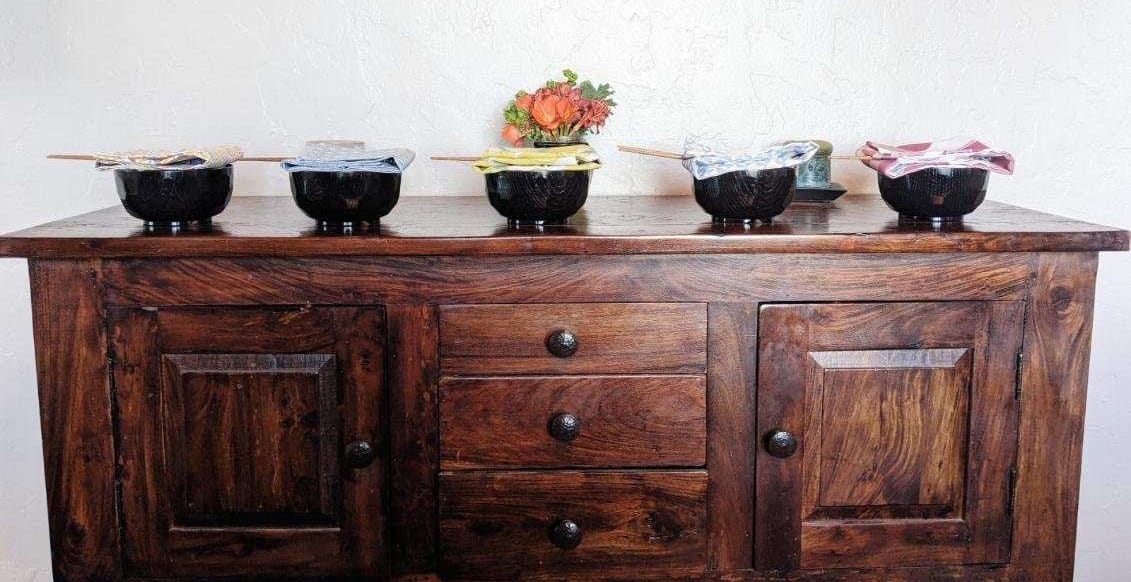
I had lightly said I was scared of breakfast for quite some time. Even though I cook almost daily and even have considerable training in Japanese cooking, breakfast at the temple might as well be skydiving for the first time, in a foreign country, wearing weights on my wrists and ankles.
People have been telling me I’m courageous my whole life, but I never identified much with that observation, either before I was aware of my own fear or after. Until I was about 30, I never had enough sense to be afraid when I should have, and when I did feel fear, it was debilitating.
Over the past 20 years, however, I’ve come to know fear - intimately. It took systematic soul-searching and humbling transparency to get through enough confusion and numbness to discover that I’d been driven by fear all along, even when I didn’t feel it.
After getting into intensive meditation, though, fear began to drop away - so dramatically that I didn’t even recognize it for awhile in the form and amount that remained.
The fear that visits me these days is technically the same force that it was years ago, but it comes less often, and is more likely to be channeled productively rather than destructively.
Fearlessness is Trust.
In a recent talk, Ursula said at one point, “Sitting is a fearlessness of letting reality be what it is.” Then she added that, in this context, fearless doesn’t mean the absence of fear, only that one fully accepts it as a part of reality, just as it is: “fearlessness is trust.”
My fear of breakfast then, was not debilitating, but enlivening, in the context of a practice and a teacher I trust. I heard another teacher say just this week, getting used to things causes us to space out; in practice we must keep things challenging enough to be working at our edge.
So I did want to make breakfast. I didn’t truly know why - just that it was already in motion once I’d been a committed student of the Roshi for almost 3 years. I thought it was somehow both a privilege and a burden, and I knew experiencing it directly was the only way to begin to understand what breakfast had to teach.
First I thought I was afraid of making mistakes due to nerves: trying so hard to do a good job under the pressure of being observed that I would be thinking instead of paying attention, and then make the very mistakes I knew to avoid.
Then I thought I was afraid of making stupid mistakes, and by stupid, I mean not understanding my corrections and continuing to make the same mistakes.
Finally, I wondered if I would reveal to everyone that I wasn’t as good as anyone thought I was . . . myself included. I had seen others get the same corrections over and over - the rice is too thick; there isn’t enough; you made too much; too much miso; too many plums in the bowl; the mochi is undercooked. Most of these corrections were things I couldn’t understand even as an observer, but I assumed the cook could understand. I wondered if I would be able to recalibrate, and whether I was missing recalibrations the others were making. “Wondered,” of course, also implies that I had constantly been making guesses, assumptions, and stories about breakfast.
I was wrong about all of it (see Surprise, the previous re-posted reflection).
I practiced for two days before the Roshi came to breakfast: the first day, the abbot demonstrated and I observed. We ran 10 minutes late, as he described a process that I knew from my own experience should take twice as long as the time allotted to make breakfast. The second day, he had me make breakfast alone. I got it done, but was keenly aware that I couldn’t tell if any of it would have approached the Roshi’s standards. I waited eagerly for corrections after breakfast, but none came. I asked if the miso paste seemed right, because I thought surely it was off, but he said it was fine.
The third day, and the first official morning of sesshin training, the Roshi came to breakfast. I had prepped rice the night before; I had gotten my dishes out and filled the tea kettles at 3:30 a.m., and I had run from the zendo to the kitchen to save another 90 seconds. I knew I had to ring the bell on the nose when the trainees finished the morning sutra, but I didn’t know when the Roshi would arrive. In the past, I had only seen that she was already sitting, watching us file in when we came up to the kitchen to eat.
On my first day cooking for her, she was 10 minutes early, and not impressed.
“That (rice) should have been finished by now. This (mochi) will not be ready in time.”
She swept in and started taking over, managing the stove, making adjustments, and telling me now and then that I will not be doing what she is doing - she was only doing it to get breakfast on the table.
With her help, it was ready when the trainees arrived. We ate, and then came the blistering response I had been fearing for years. The abbot began to offer corrections, but the Roshi interrupted: “No. I am not tasting that again. I will show her how to do it myself.”
She told me to get out all the ingredients again and ordered everyone else out of the kitchen. This, I had never seen done before.
Do you know what else I had never experienced before?
A public dressing down by an authority figure in front of my peers without feeling shame, fear, or resistance.
I improved about 90%, if one can measure such things, by the next day, but the heat stayed just as intense. Every day a new challenge: a cucumber left out by someone, for what purpose? As the next cook entering the kitchen, it was my job to figure it out - correctly and without questions. The next day, two ceremonial cloths were missing, and I found them soaking in bleach water. I had to quickly determine there were no replacement cloths and rinse and wring these out the best I could before the Roshi - the first person to touch one cloth after breakfast - handled it.
On the second to last day, I had perfected the rice as much as I thought possible - the texture and water to rice ratio was correct, and I had cooked it as hot and as early as possible, enabling me to allow it to cool for a full 10 minutes before the beginning of breakfast. Still, my last correction came in after we cleared the table: “the rice is still too hot.”
I bowed in acceptance of the correction, while it plopped itself down like a squatter in my mind: how can the rice be cooler without any more time? Again, I was clear that making my case was not an acceptable route to an answer. I moved on with my day - cleaning the kitchen, watering the garden, raking the gravel, with the hot rice koan layered on top of the koan from sanzen (ritual twice-daily private meetings with the Roshi) that was working me 24 hours a day.
“There is absolutely no difference between sitting on your cushion, mu, and making breakfast.”
– Ursula Jarand
If you'd like more connection, join True Nature. Among other offerings, the once-monthly online sitting group led by Marcy provides the opportunity for meditation and practice-based discussion with the CCE community.